Uncategorized

whocovid19 20200709 gh 224.tmb 479v

Key facts: Quality health services

Key facts: Quality health services Overview Quality of care is the degree to which health services for individuals and populations increase the likelihood of desired health outcomes and are consistent with evidence-based professional knowledge. This definition of quality of care spans promotion, prevention, treatment, rehabilitation and palliation, and implies that quality of care can be measured and continuously improved through the provision of evidence-based care that takes into consideration the needs and preferences of health service users – patients, families and communities. Quality health services should be: Universal health coverage and quality: a global commitment The overarching aim of UHC is for all people who need health services to receive high- quality care without financial hardship. Quality health services (promotive, preventive, curative, rehabilitative and palliative) is thus embedded within the definition of UHC. Even with increased access to services, health improvements can remain elusive unless those services are of sufficient quality to be effective (5). Taking action for enhancing quality of care Quality health services are a product of the health system’s environment and the actions of health care providers and individuals working within the system. To achieve the goal of access to high quality health services for all, governments should take an integrated approach and work with different key actors within the health system and beyond, including individuals and communities. The success and sustainability of efforts to improve quality of care is dependent on effective integration of health actions and programmes across different levels of the health system. National strategic direction on quality: National policies and strategies aimed at improving quality of care are essential to ensure action across the health system and need to be closely aligned with broader national health policy and planning. The national quality policy and strategy identifies a pragmatic package of interventions to strengthen the system environment, reduce harm, improve clinical care, and engage patients, families and communities. An illustrative list of interventions for each of these areas is available for countries to consider. Quality across the health system: In addition to an enabling policy environment, the provision of quality health services requires good governance; skilled and competent health workforce that is supported and motivated; financing mechanisms that enable and encourage quality care; information systems that continuously monitor and learn to drive better care; medicines, medical devices and technologies that are available, safe and appropriately regulated; and accessible and well-equipped health care facilities. Quality-driven primary health care approach: Primary health care (PHC) is pivotal for building a high quality health system and achieving universal health coverage. Careful consideration is needed to ensure PHC-oriented health systems deliver effective, safe and user-centred health services. PHC can not only improve quality from the perspective of people but also enhance their trust in the health system. Monitoring and evaluation: Quality of care needs to be continually measured to monitor progress towards improvement goals. This requires context-specific indicators and accurate, timely and actionable data. The integration of global and national measurement efforts is critical to ensuring that countries collect data that matters and use that data to transform and improve their service delivery systems. The role, for instance, of adverse event reporting and learning systems is critical in this context. Data-driven response and learning systems: It is critical to document and share on-the-ground experiences related to quality of care efforts. This is key to understand the realities of the health system, what works and what doesn’t work. Such knowledge, emerging from implementation experiences must be shared globally and within the countries.  Engaging users and communities: To improve quality of care, health systems need to listen to and learn from the population they serve. Understanding people’s views can provide valuable insights on what is important for them. Robust and regular dialogue between governments and their population fosters trust as people feel that the policy-makers listen to their needs and interests and consider their perspectives (6). WHO’s response WHO works with Member States and partners to ensure that quality of health services is addressed at the national level and operational plans are in place to improve quality of care at national, sub-national and facility level.  Specifically, WHO: References

Key facts: Quality health services Read More »

shutterstock 2455015523 1024x683

Africa CDC Launches Operational Research on Malaria in Southern Africa

Africa CDC Launches Operational Research on Malaria in Southern Africa Lusaka, Zambia | 12 November 2025 — The Africa Centres for Disease Control and Prevention (Africa CDC) has launched operational research on malaria in Lesotho, Namibia and Zimbabwe, supported by a US$150,000 grant from the World Bank. This initiative, which follows recurring malaria outbreaks in the southern region, will be conducted from 14 November to 12 December 2025, and aims to strengthen Member States’ efforts to control and eliminate malaria. “The operational research aims to generate evidence-based data to enhance malaria control and elimination strategies in Southern Africa, where many live in endemic areas,” said Dr Lul Pout Riek, Director of the Southern Africa Regional Co-ordinating Centre (SA-RCC). “By tailoring interventions to local needs, the study seeks to optimise responses, improve outbreak management, and ultimately reduce morbidity and mortality across the continent.” The study will also assess the effectiveness, feasibility and acceptability of different larvicide types and integrated vector control strategies. “Researchers from the Africa CDC Science and Innovation Directorate, Southern RCC, national health ministries, public health institutes and academia will employ advanced analytical methods — including vector bionomics, mathematical modelling and simulation — to better understand malaria dynamics,” said Dr Mosoka Papa Fallah, Acting Director of the Science and Innovation Directorate at Africa CDC. The research further seeks to identify bottlenecks in malaria healthcare delivery, particularly access to care during epidemic periods, to strengthen prevention and outbreak control in Lesotho, Namibia and Zimbabwe. Three Member States were selected based on researchable areas offering scalable solutions and the existence of in-country research protocols aligned with Africa CDC’s criteria. “In Lesotho, we have reported localised outbreaks and increased vulnerability in certain districts. We aim to understand the entomological profile of malaria to inform our national elimination strategies,” said Mr Khotso Mahomo, International Health Regulations Manager at Lesotho’s Ministry of Health. In Namibia, the Ministry of Health and Social Services reported 5,898 confirmed malaria cases between December 2024 and January 2025, including 840 hospitalisations and 28 deaths. Of these, 3,493 were locally transmitted and 2,496 were imported. “This research will help identify emerging drivers of transmission and social determinants of severe disease,” said Dr Iyaloo Mwaningange, Deputy Director of the Epidemiology Division, Ministry of Health and Social Services, Namibia. “It will also highlight operational challenges encountered during outbreak response and inform targeted interventions.” Zimbabwe, meanwhile, reported a 180% surge in cumulative malaria cases between Week 1 and Week 17 of 2025 — rising from 21,309 cases in 2024 to 59,647 in 2025. Malaria-related deaths increased by 218%, from 45 in 2024 to 143 in 2025, with Mashonaland Central, Manicaland and Mashonaland West accounting for over 80% of cases. “This operational research will generate actionable evidence for optimising vector control operations, updating policy, reinforcing health system delivery, and informing cross-border initiatives,” said Professor Nicholas Midzi, Director of the National Public Health Institute of Zimbabwe. The study will also evaluate integrated indoor residual spraying and antimalarial mass treatment strategies, as well as supply-chain effectiveness and the roles of community health workers, to inform future policy and decision-making. The research is expected to yield evidence-based recommendations to strengthen malaria surveillance, outbreak response and case management, while enhancing regional capacity for malaria elimination in the three countries. “Africa CDC remains committed to supporting Member States in their efforts to control and eliminate malaria. This operational research is a key step towards generating evidence-based solutions to end malaria in Southern Africa,” the statement concluded. ### NOTE TO EDITORS For media inquiries Margaret Edwin | Director of Communication and Public Information | Africa CDC  Edwinm@africacdc.org About Africa Centres for Disease Control and Prevention (Africa CDC) The Africa Centres for Disease Control and Prevention (Africa CDC) is a public health agency of the African Union. It is autonomous and supports member states in strengthening health systems. It also helps improve disease surveillance, emergency response, and disease control.  Africa CDC Launches Operational Research on Malaria in Southern Africa – Africa CDC

Africa CDC Launches Operational Research on Malaria in Southern Africa Read More »

571773912 1137746865212823 7337222006891990741 n

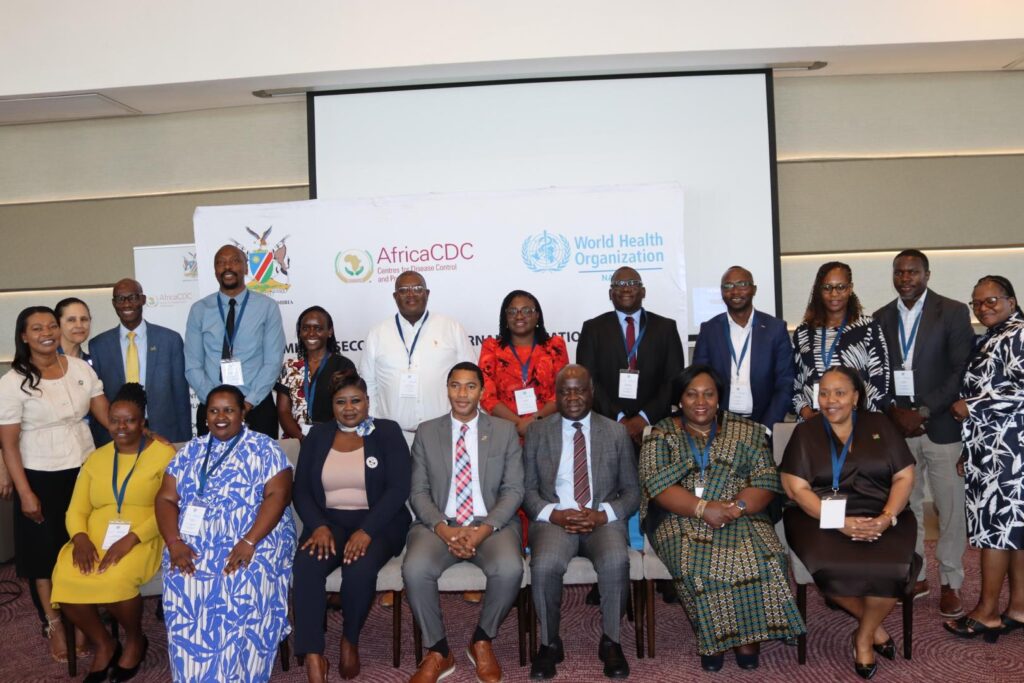
Namibia Conducts Second Joint External Evaluation to Strengthen Health Security

The Ministry of Health and Social Services (MoHSS), with support from the World Health Organization (WHO) and partners, successfully conducted Namibia’s second Joint External Evaluation (JEE) from 20–24 October 2025. The evaluation assessed the country’s national capacities to prevent, detect, report and respond to public health threats and provided an opportunity for the country to develop evidence-based priority actions to review and update the National Action Plan for Health Security (NAPHS) 2021–2025 strategy that will come to an end this year. “The JEE is a critical tool for measuring our progress and identifying the areas where we need to strengthen our health systems,” said Dr. Esperance Luvindao, Minister of Health and Social Services in a speech delivered by Dr. Theo-Ben Kandetu. “It allows Namibia to ensure that we are prepared to respond rapidly and effectively to public health threats, safeguard the well-being of our people, and guide our future investments in health security” he emphasised. The International Health Regulations (IHR 2005), adopted by the World Health Assembly in 2005, require countries to develop capacities to detect, assess, and timely report public health events, and respond promptly to the emergencies in order to prevent international spread and safeguard global public health security. WHO’ IHR Monitoring and Evaluation Framework (IHRMEF) supports countries to evaluate their progress in building these preparedness and response capacities in a standardised manner. The Joint External Evaluation (JEE) tool was used during this JEE exercise in Namibia. Namibia conducted its first JEE in November-December 2016, and this informed the development of the NAPHS 2021–2025. With the current NAPHS period concluding at the end of this year, the 2025 JEE was critical to assess progress made in improving health security, identify areas for improvement and develop priority actions to guide the next phase of planning for health security enhancement for the country. Prior to the JEE external mission, Namibia voluntarily requested WHO for support to conduct the JEE. The voluntary request was followed by a multi stakeholder orientation and planning workshop in April 2025, an IHR National Focal Point (IHR NFP) orientation in June 2025 and concluded with the country self-evaluation workshop in September 2025. The build up to the JEE external mission also involved the identification and designation of focal points for the 19 JEE technical areas, who were responsible for coordinating the response and documents/ evidence gathering for their technical areas to have an informed score of the progress indicators. “The JEE is a voluntary, collaborative, multisectoral process to assess country capacities to prevent, detect, and rapidly respond to public health risks,” said Dr. Richard Banda, WHO Representative to Namibia during the opening ceremony for the JEE external mission workshop.  He further clarified that the exercise “allows Namibia to identify urgent needs, engage partners effectively and prioritize actions that will improve health security for all citizens”. During the week, the external experts conducted in-depth reviews of the self-evaluation report and conducted field site visits to key multisectoral health security locations to verify some of the information, including Hosea Kutako International Airport, Walvis Bay International Airport, Namport, Trans-Kalahari Border Post, the National Emergency Operation Center and Meatco Abattoir.  The teams also visited various health specific sites such as the National Public Health Emergency Operations Centre, Windhoek Central Hospital, Intermediate Katutura Hospital, Khomasdal Clinic, National Institute of Pathology reference laboratory, and Quality Surveillance Laboratory.  During the workshop, the national focal point presented the thematic area indicator scores, the evidence and documentation informing the scores and the proposed key priority actions. The external team and participants reviewed the presentations and available evidence and provided guidance on the appropriate scoring based on the JEE tool standards; the appropriate scoring was then done in agreement with the concerned government departments.   More than 80 participants representing government ministries, agencies and development partners, including the Office of the Prime Minister, Ministry of Health and Social Services including selected Regional Health Directorates, Ministry of Agriculture, Fisheries, Water and Land Reform, Ministry of Environment, Forestry and Tourism, , Ministry of Mines and Energy, Ministry of Defence and Veterinary Affairs, Ministry of Finance, Ministry of Gender Equality and Child Welfare, MoHSS, Namibian Port Authority,  Africa CDC, US-CDC,  Namibia Airports Company, and the City of Windhoek. UN specialised agencies WHO, UNFPA, FAO and UNICEF were involved in the evaluation. WHO and partners will continue to work closely with the Government of Namibia to transform the JEE priority actions into costed, implementable activities within the next National Action Plan for Health Security. The proposed priority actions from the JEE will inform the next NAPHS and guide strategic interventions to ensure the country is prepared to prevent, detect, and respond to public health threats. This activity happened at the great time when the WHO is busy finalising the development of the third Country Cooperation Framework, 2026-2030 and planning for the next biennium 2026-2027. The priority actions will inform the “Protect” outcome area for the Country Cooperation Framework. The external team will compile a comprehensive report, detailing Namibia’s capacities across 19 technical areas and highlighting gaps, challenges and opportunities for development. The report will be reviewed by the MoHSS before final publication, ensuring transparency and public accessibility, before it is published on the WHO website. Namibia Conducts Second Joint External Evaluation to Strengthen Health Security | WHO | Regional Office for Africa

Namibia Conducts Second Joint External Evaluation to Strengthen Health Security Read More »

g20du8nxeae1rtt

Namibia Launches Key Health Strategies to Improve the Health of Women, Children and Adolescents

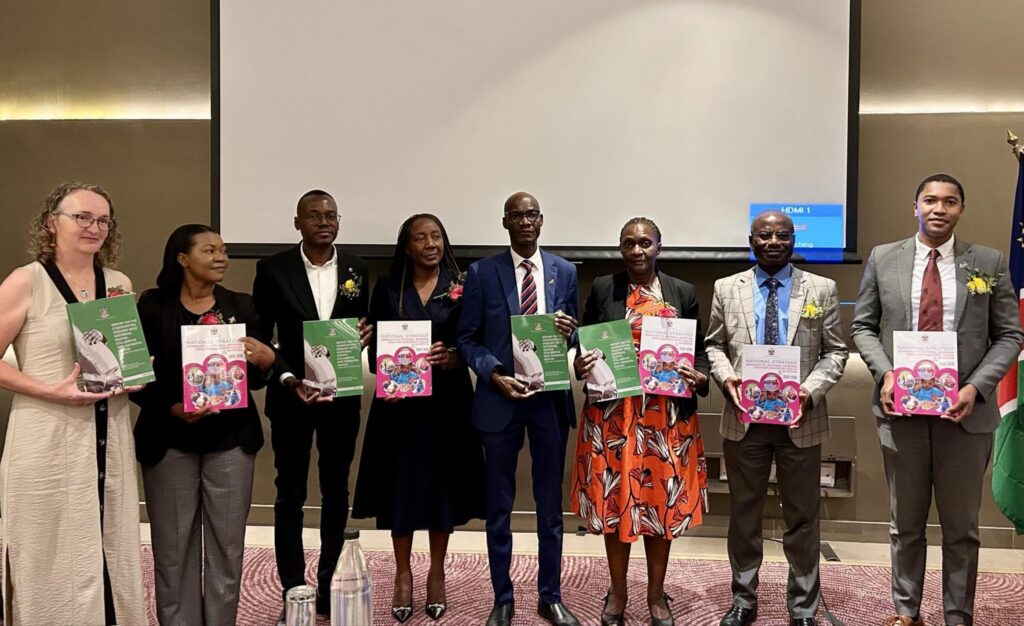
In a significant move to advance the health and well-being of women, children, and adolescents, Namibia’s Ministry of Health and Social Services (MoHSS), supported by the World Health Organization (WHO) and partners, officially launched two key health policy documents on 9 October 2025 in Windhoek. The two documents are the National Strategy for Reproductive, Maternal, Newborn, Adolescent Health and Nutrition (RMNCAH&N) 2025/2026–2029/2030 and the Triennial Report on the Confidential Enquiry into Maternal Deaths, Stillbirths, and Neonatal Deaths covering the period from 1 April 2021 to 31 March 2024. The RMNCAH & N strategy is a roadmap for accelerating progress towards the Sustainable Development Goals (SDGs) and it aligns with the World Health Organization Global Strategy for Women, Children and Adolescent Health (2016-2030). The launch marks a renewed national commitment to ending preventable maternal and child deaths and improving access to quality, equitable health services across Namibia. While significant progress has been made in expanding healthcare access, challenges remain, particularly in maternal and neonatal mortality, adolescent health, and nutrition. The RMNCAH&N Strategy aims to tackle these through evidence-based guidelines and a multisectoral approach that promotes integrated care and community empowerment. The Confidential Enquiry report, compiled by the National Maternal, Stillbirth, Neonatal Death Review Committee (NMSNDRC), investigates causes of death, identifies avoidable factors, and recommends actions to improve outcomes. The report reviewed 150 maternal deaths, with hypertension in pregnancy (16.7%), haemorrhage (16%), and abortive outcomes (12%) as the leading causes. Reporting to the Health Minister, the committee’s findings will inform national policies, guide clinical practice, and help translate lessons into life-saving interventions. The Minister of Health and Social Services, Dr. Esperance Luvindao, in a statement read by Mr. Jeremiah Nghipundjwa, reaffirmed the Ministry’s commitment to quality, equitable health services for women, children, newborns and adolescents under the new RMNCAH&N Strategy. She highlighted evidence-based interventions, data-driven solutions, and capacity-building for healthcare workers as key priorities. Highlighting the importance of innovation, investment, and collaboration, Dr. Luvindao urged all stakeholders to listen, act, and uplift the voices of those often unheard. “The success of this strategy depends not just on institutions, but on the commitment of each of us here today,” she said. “Together, we will create a future defined by health, dignity, and opportunity for all, where no woman, child, or adolescent is left behind”. Namibia has made significant progress in maternal health over the past decade.  As per the data published in April 2025by the Maternal Mortality Estimates Interagency Group, the Maternal Mortality Ratio (MMR) reduced from 400 per 100,000 live births in 2000 to 139. Still above the global target of less than 70 by 2030. The RMNCAH&N Strategy sets ambitious goals to reduce maternal deaths to 60 per 100,000 live birth and neonatal mortality from 24 to 10 per 1,000 live births by 2030. Under-five mortality currently stands at 41 per 1,000, with neonatal deaths declining more slowly and the strategy aims to accelerate the reduction rate and reach 10 deaths per 1000 live births by 2030. Representing WHO, Dr. Juliet Nabyonga, Health System Advisor, commended Namibia’s commitment to strengthening its health system and underscored the significance of the newly launched RMNCAH&N Strategy. “These milestone documents reflect a renewed national pledge to ensure every woman, newborn, and adolescent not only survives but thrives,” she said. She highlighted the need to institutionalize Primary Health Care, integrate services and empower communities. Dr. Nabyonga reaffirmed WHO’s support in evidence-based guidance, capacity building, and accountability, adding, “Together, we can create a future defined by health, dignity, and opportunity”. The launch underscores Namibia’s prioritization of maternal, newborn, and adolescent health in line with the SDGs, aiming to improve national outcomes and advance global equity in healthcare. Namibia Launches Key Health Strategies to Improve the Health of Women, Children and Adolescents | WHO | Regional Office for Africa

Namibia Launches Key Health Strategies to Improve the Health of Women, Children and Adolescents Read More »

windhoek namibia scaled.jpg.optimal

Namibia hosts quality management conference to elevate healthcare provision standards

In a significant stride towards enhancing healthcare delivery, the Ministry of Health and Social Services convened the first-ever healthcare Quality Management Conference in Windhoek on Wednesday. The conference, which is presented under the “Beyond the Blueprint: Transforming Policy into Quality Practice” is a substantial step in the country’s effort to align healthcare services with internationally recognised standards. The Minister of Health and Social Services, Dr. Kalumbi Shangula, set the tone for the conference by stressing the ministry’s unwavering commitment to continuous improvement in healthcare. “Our vision is clear – to be the leading provider of healthcare and social services that meet and exceed internationally recognized standards,” he said. The minister highlighted the importance of collaboration between the public and private sectors, stressing that health is a shared responsibility that transcends boundaries. “The vital role of the National Quality Policy and Strategy (NQPS), launched in September 2022, as the foundation for building a culture of care that prioritizes patient safety, treatment efficacy, and comprehensive care,” he said. Shangula also stressed the significance of implementing Quality Standards for Healthcare Facilities, a roadmap designed to ensure that policies are translated into tangible, high-quality healthcare practices. The conference also provided a platform for reflecting on Namibia’s progress in quality management, particularly in the areas of HIV care, and maternal, and newborn health. According to Shangula, the health ministry has implemented quality improvement (QI) collaboratives with the support of various development partners, focusing on addressing specific gaps in healthcare services. He said the ten public healthcare facilities currently implementing the NQPS and Quality Standards were highlighted as pioneers in this journey, with efforts underway to achieve accreditation by the Council for Healthcare Services Accreditation of Southern Africa. UNICEF Namibia’s Country Representative, Samuel Kweku Ocran, shared the minister’s sentiments by also stressing the importance of quality improvement in healthcare. “Quality improvement and performance improvement are vital components of the healthcare system, playing a key role in improving patient outcomes, promoting patient safety, and optimizing healthcare delivery,” Ocran said. He shared insights on UNICEF’s ongoing support for maternal and newborn health quality improvement programs in Namibia, which have significantly benefited from investments totalling approximately N$4.5 million since 2019. “These initiatives have reached over 98% of all live births annually, reflecting the commitment to reducing morbidity and mortality among children and women,” he said. The U.S. government’s support for Namibia’s healthcare quality management was also accentuated by the Centers for Disease Control and Prevention (CDC) representative in Namibia. The CDC, alongside USAID and PEPFAR, has been instrumental in supporting the health ministry’s mission to deliver high-quality, equitable healthcare services across the country. “Quality relies upon data, training, performance management, and mentorship,” the CDC’s representative in Namibia said. The conference brought together healthcare professionals, policymakers, and experts who will share best practices and successful Quality Improvement initiatives from both public and private healthcare facilities. The presentations and discussions over the three days of the conference are expected to develop a culture of continuous improvement across all healthcare services in Namibia, driving the nation closer to its goal of delivering exceptional healthcare to all communities.

Namibia hosts quality management conference to elevate healthcare provision standards Read More »

ed

Namibia’s cholera-free decade ends with one confirmed case

DAKAR, March 13 (Reuters) – Namibia has confirmed the first case of cholera in ten years, the Africa Centres for Disease Control and Prevention said on Thursday, adding that laboratory confirmation of the disease was “a major alert” for the country’s health officials. The patient, a 55-year-old woman exhibiting symptoms of diarrhoea, has recovered and was discharged from a hospital in the country’s northwest Kunene region, Namibia’s health ministry said on Tuesday.

Namibia’s cholera-free decade ends with one confirmed case Read More »

luvindao

Namibian health system invests in infrastructure, digitalisation & equity

Minister of health and social services Esperance Luvindao Esperance Luvindao, minister of health and social services, delivered in the National Assembly on 6 May 2025 I rise to introduce and motivate the budget for Vote 13: Ministry of Health and Social Services. I commend Ericah Shafudah, minister of finance, and Kaire Mbuende, director general of the National Planning Commission, for a well-crafted and articulated budget. For the 2025/26 financial year, the Ministry of Health and Social Services is allocated an amount of twelve billion, two hundred and sixty-eight million, three hundred and seventy-two thousand Namibia dollars (N$12 268 372 000). This is about 4.4% of the gross domestic product, 11.5% of total budget expenditure, and 8.2% or N$927.4 million more than the previous year’s allocation. Vote 13 comprises five main budget programmes through which key health and social services are provided. This vote is one of the bedrocks for social development and transformation of our country.

Namibian health system invests in infrastructure, digitalisation & equity Read More »

Scroll to Top